Businesses today are surrounded by data. Every customer click, online purchase, support request, and marketing campaign creates valuable information. But having access to data isn’t enough anymore. The real value comes from understanding that information and using it to make smarter business decisions.
This is where Artificial Intelligence (AI) is changing the game.
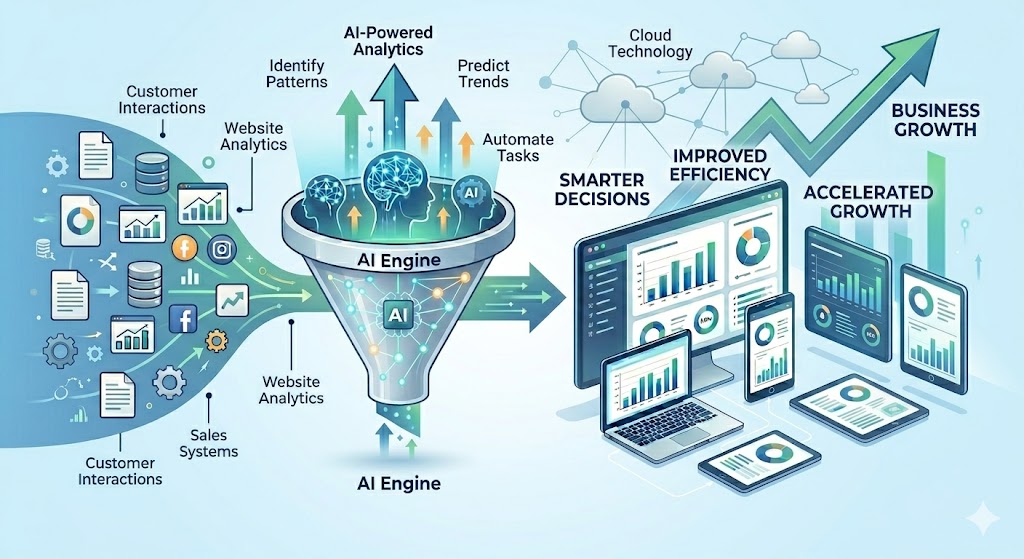
AI helps businesses analyze large amounts of data quickly, identify patterns, predict trends, and automate time-consuming tasks. Instead of relying on guesswork or outdated reports, companies can use AI-driven insights to make faster, more informed decisions that support long-term growth.
When combined with cloud technology, AI becomes even more powerful, giving businesses the flexibility and scalability needed to stay competitive in a fast-moving digital world.
Why Businesses Need Smarter Data Strategies
Most organizations collect data from multiple sources every day, including:
- Customer interactions
- Website and social media analytics
- Sales and CRM systems
- Inventory and supply chain platforms
- Financial reports
- Internal operations and workflows
The challenge is that this information is often spread across different systems, making it difficult to turn raw data into useful insights.
Without the right tools, businesses can miss opportunities, overlook customer trends, and make slower decisions. AI helps solve this problem by organizing and analyzing data in ways humans simply can’t do at the same speed or scale.
Instead of spending hours sorting through spreadsheets or reports, teams can focus on strategy, innovation, and customer experience.
How AI Turns Data Into Better Decisions
AI doesn’t just process information — it helps businesses understand what the data actually means.
Modern AI solutions can identify patterns, recognize customer behavior, and even predict future outcomes. This allows organizations to make proactive decisions rather than reacting after problems occur.
For example, AI can help businesses:
- Predict customer buying behavior
- Improve marketing performance
- Identify operational inefficiencies
- Forecast sales trends
- Automate repetitive tasks
- Strengthen cybersecurity monitoring
- Improve customer service experiences
These insights help companies make decisions with greater confidence and accuracy.
Rather than asking, “What happened last month?” businesses can start asking:
- “What’s likely to happen next?”
- “What should we prepare for?”
- “How can we improve results moving forward?”
That shift from reactive thinking to proactive planning creates a major advantage.
The Role of Cloud Computing in AI Growth
AI requires speed, storage, and computing power — and that’s where cloud computing plays an important role.
Cloud-based infrastructure gives businesses access to scalable resources without the need for expensive hardware or large internal IT teams. Companies can securely store data, run AI applications, and access analytics from virtually anywhere.
Together, AI and cloud computing help businesses:
- Scale operations more efficiently
- Access real-time insights
- Improve collaboration across teams
- Reduce infrastructure costs
- Increase operational flexibility
- Support business growth without major system limitations
For growing businesses, this combination creates a strong foundation for innovation and digital transformation.
Real-World Ways Businesses Are Using AI
AI is no longer limited to large tech companies. Businesses across industries are using AI to improve operations and deliver better customer experiences.
Some common examples include:
Personalized Customer Support
AI-powered chatbots and virtual assistants can answer questions, assist customers 24/7, and reduce response times while freeing up support teams for more complex tasks.
Predictive Analytics
Businesses can use AI to forecast demand, identify future trends, and make smarter decisions about staffing, inventory, and marketing strategies.
Workflow Automation
AI can automate repetitive tasks such as data entry, scheduling, reporting, and document processing, helping teams work more efficiently.
Smarter Reporting and Insights
AI tools can turn complex data into easy-to-understand dashboards and visual reports, making it easier for leadership teams to make informed decisions quickly.
Enhanced Security Monitoring
AI systems can detect unusual activity, identify risks, and strengthen cybersecurity efforts before threats become serious issues.
Why Strategic AI Implementation Matters
While AI offers significant benefits, successful implementation requires a thoughtful approach.
Businesses need more than just software — they need a strategy that aligns technology with their goals. This includes:
- Reliable cloud infrastructure
- Secure data management
- Clear business objectives
- Ongoing monitoring and optimization
- Responsible and ethical AI practices
Organizations that approach AI strategically are more likely to see long-term success and measurable results.
It’s also important to ensure transparency, data privacy, and security throughout the process. AI should support human decision-making, not replace it entirely.
Looking Ahead: Building a Smarter Business Future
AI is rapidly becoming an essential part of modern business growth. Companies that can effectively use data to guide decisions will be better positioned to adapt, innovate, and compete in the future. The businesses seeing the greatest success today are not simply collecting data — they are using AI to turn that data into meaningful action.
As technology continues to evolve, AI and cloud computing will play an even larger role in helping businesses improve efficiency, better understand customers, and uncover new opportunities for growth.
The future belongs to organizations that can turn information into insight — and insight into action.