
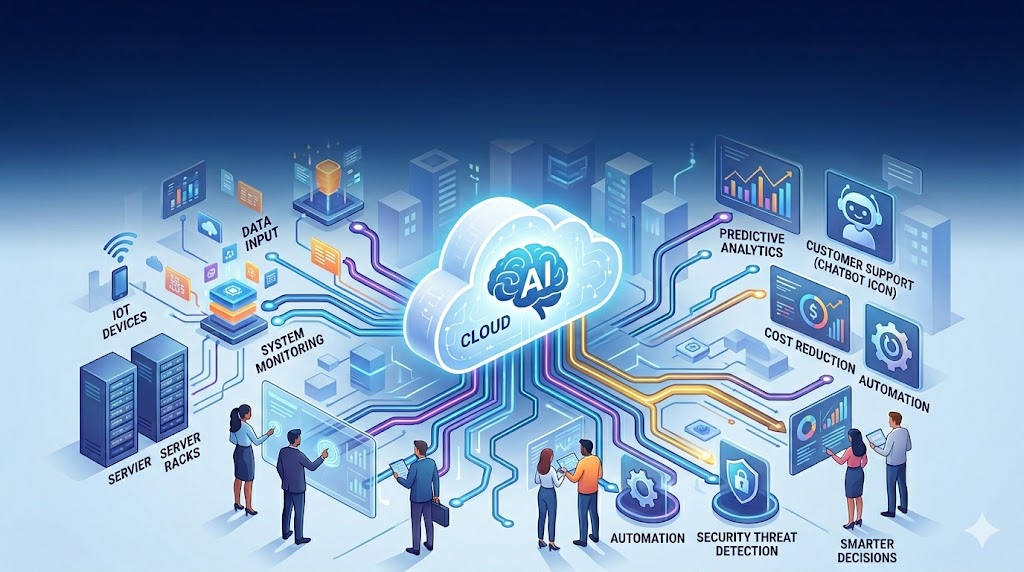
Artificial Intelligence (AI) isn’t just a buzzword anymore—it’s something businesses are actively using to work smarter, move faster, and stay competitive. When combined with cloud technology, AI becomes far more accessible, even for companies without massive IT budgets.
Today, the combination of ai and cloud computing is helping organizations unlock new opportunities, streamline operations, and make better decisions using data.
Let’s break down what this really means and how businesses can make the most of artificial intelligence in cloud computing.
What Does AI Implementation in the Cloud Actually Mean?
At its core, AI implementation in the cloud means using cloud platforms to build, train, and run AI-powered solutions—without needing expensive hardware or complex infrastructure.
Instead of setting everything up from scratch, businesses can use cloud services to access:
- Ready-to-use AI tools and APIs
- Machine learning platforms
- Scalable storage and computing power
- Real-time data processing capabilities
This makes cloud computing using artificial intelligence much more practical and cost-effective for businesses of all sizes.
Why AI and Cloud Computing Work So Well Together
There’s a natural connection between ai and cloud computing:
- AI needs large amounts of data and computing power to function effectively
- Cloud platforms provide the flexibility and scalability to handle those demands
At the same time, AI enhances cloud systems by making them more intelligent—automating tasks, improving performance, and generating insights.
It’s a two-way relationship where both technologies make each other stronger.
Key Benefits of Artificial Intelligence in Cloud Computing
1. Easy Scalability
Cloud platforms let you scale your AI applications as your business grows. Whether you’re processing small datasets or massive workloads, the cloud adjusts accordingly.
2. Lower Costs
You don’t need to invest heavily in infrastructure. With pay-as-you-go pricing, you only pay for what you actually use.
3. Automation That Saves Time
AI can handle repetitive tasks like monitoring systems, processing data, or answering customer queries—freeing up your team to focus on more important work.
4. Better Decision-Making
AI tools can analyze huge amounts of data quickly, helping businesses spot trends, predict outcomes, and make smarter decisions.
5. Stronger Security
AI can detect unusual activity and potential threats in real time, helping protect sensitive data in the cloud.
6. Improved Customer Experience
From chatbots to personalized recommendations, AI helps businesses deliver faster, more relevant interactions to their customers.
Real-World Examples of Cloud Computing Using Artificial Intelligence
Businesses across industries are already putting AI and cloud computing into action:
- Customer Support: AI chatbots provide instant responses and 24/7 service
- Predictive Analytics: Companies forecast demand and customer behavior more accurately
- Fraud Detection: Financial institutions monitor transactions and flag suspicious activity
- Healthcare: AI helps analyze patient data and supports faster diagnosis
- IT Operations: Automated systems detect issues and optimize performance without manual intervention
How to Successfully Implement AI in the Cloud
If you’re planning to adopt AI, here’s a simple approach to get started:
1. Start with Clear Goals
Identify what you want to achieve—whether it’s automation, better insights, or improved customer experience.
2. Choose the Right Cloud Provider
Look for a platform that offers strong AI capabilities, scalability, and security.
3. Focus on Your Data
AI is only as good as the data behind it. Make sure your data is clean, organized, and accessible.
4. Begin Small
Start with a pilot project to test how AI can add value before scaling it across your business.
5. Scale Gradually
Once you see results, expand AI into other areas of your operations.
6. Keep Security in Mind
Ensure your systems follow data protection standards and compliance requirements.
Challenges to Be Aware Of
While the benefits are clear, there are a few challenges businesses should prepare for:
- Managing data privacy and compliance
- Integrating AI with existing systems
- Avoiding dependence on a single cloud provider
- Keeping cloud costs under control
Planning ahead can help minimize these risks.
What the Future Looks Like
The future of artificial intelligence in cloud computing is moving toward even greater automation and accessibility. Some emerging trends include:
- AI-as-a-Service (AIaaS)
- Edge computing combined with AI
- More advanced, self-managing cloud systems
- Increased use of generative AI tools
These advancements will continue to make cloud computing using artificial intelligence even more powerful and easier to adopt.
Final Thoughts
AI implementation in the cloud is no longer just for large enterprises—it’s something businesses of all sizes can benefit from. By combining ai and cloud computing, organizations can improve efficiency, reduce costs, and make smarter, data-driven decisions. If your business is looking to stay competitive in today’s fast-moving digital landscape, adopting artificial intelligence in cloud computing is a smart place to start.
Schedule a call to learn more